Thursday, September 18, 2008

Riders Block - Day 3

Iowa to South Dakota

When people who don't live in Iowa are asked to conjure up images of the state, most would probably picture nothing. Not nothing as in a blank mind but nothing as in vast fields of nothingness. It isn't because they have never been and can't visualize the state, it is because they assume that there is nothing there and this is why they picture flat nothingness, stretching on for ever.


This uneducated assumption of Iowa is basically true; there really isn't anything there. It has a few large cities like Des Moines and Sioux City but for the most part is covered with flat farms and small rolling hills. The state is a little over three hundred miles from east to west, that is, from Moline, Illinois to Omaha, Nebraska is about a six and a half hour trip in a vehicle that goes little over fifty miles an hour. The people of Iowa whom I encountered in restaurants and gas stations were mostly very friendly and pleasant, enjoying their quiet, hard-working lives in America's heartland. At a local farming town where I refueled, I saw a couple of kids, the oldest no more than fourteen, driving around in their own mud-splattered truck.

The actual State of Iowa is not so friendly and tried without success to throw me out of it. The sky was mostly grey for my east-west trip and I had been hearing reports all morning on the radio about rain. It finally came down outside Davenport and rained heavily for sometime. The worst of the unwelcoming weather though was the strong, north-south winds that flew in across the plains and crashed into the sides of my top-heavy vehicle, trying desperately to push me off the road. I would get hit with a ferocious gust and feel like my RV was going to tip over. I gripped the steering wheel, white-knuckled, and actually crossed myself because I was convinced I was going to flip onto my side in a ditch. After about forty-five minutes or so, the winds died down and I entered the Loess Hills so the gusts were not as bad.


It took all morning to drive across the enormous state and when I finally reached the western edge, I hit the flat plains of the Missouri River valley. It is like somebody leveled the area around the highway with a bulldozer and suddenly the endless, slow ride through Iowa becomes a smooth, pleasure cruise with plenty of corn to spare. Only miles from Omaha, Nebraska, I take I-29 north up the valley to Sioux City, Iowa. The city itself has a particular odor that does not suit it and has several factories that creep along the Missouri. I eat at a sandwich shop and get some coffee around 4 or 5 in the evening.

I scurry over the border into South Dakota and drive into Sioux Falls. I decide to stop outside the city at a rest stop but worry about the gas stations that will be open at this time of night. I venture off the road some five miles at one exit when I am running low, and find a small town, surrounded by enormous ranches, pushed back far off the highway. I stop at a local grocery and gas station where it is obvious to everyone that I am from out of town. I stop later at a brightly lit town to buy some beer and cigars. I must admit, I did something I never have before, which is drink and drive at the same. I start to grow tired after two beers and inhaling a cigar when I hear this commercial come on the radio:

Hey you! Driving drunk. Better get on the phone right now and call your lawyer and your bank and your bail bondsman. These are just a few of the people you'll need to get you out of the trouble you are about to be in. South Dakota police have set up sobriety check points all along this road, so watch out!

I started to get incredibly paranoid and pull over to hide the empty bottles and stick the unopened beers far in the back of the RV. I finally come upon my chosen rest stop near Presho, South Dakota, about half way through the state. The night is freezing and I bundle up for some very cold sleep.

Wednesday, September 17, 2008

Riders Block - Day 2

Ohio to Iowa
Ohio is vast and highly urbanized. It is the seventh most populous state in the union and has three major cities and several smaller ones that are still big by many standards. Everyone knows Cleveland and Cincinnati because of their representation in major league sports, but the capital, Columbus, is actually the biggest city in the state, which gives you a sense of the size of these important urban centers.


Never-the-less, a seemingly unending portion of the state is farmland and in September this means that the plains are covered with long golden stalks of dead corn plants. There are a few hills here and there to give the ride some character, but mostly the state, at least the northern half, is flat. Between the industrialized areas and farms are colonies of new, vinyl-sided houses with four sides and absolutely no dimensions.

I stopped at a state park east of Toledo to take a look at the vastness of Lake Erie. On the very edge of the lake, I could see objects on the thumb section of Michigan's mitten and the arm of Ontario that scoops down and butts against Detroit. They are factories that begin below the horizon but protrude far enough above to make out. The beach was nice but the water looked murky, I avoided putting my naked feet in for fear of what the years of pollution must have done to the un-circulating water.


Indiana is quaint and quiet for the most part. Farms of wheat and corn and soy stretch endlessly along interstate 90 in the far northern section of the state. I cut from the highway down route 20 in a cold sweat, fearing I am going to run out of gas. I haven't seen a service sign for miles and I take my chances by skidding off the highway and shooting down a local road, a main road, that must have some station to provide the hard-working farm equipment with fuel. With the needle teetering on empty, I come across a pleasant station and fill up. I am so taken by the scenery along local road that I venture down it another twenty miles or so before hooking up with 90 again near South Bend. I find a couple of Amish settlements along the way; men and woman dressed in colonial garb and horses pulling large black buggies. It's interesting to see these people interacting with modern society, each group respectfully declining to be part of the other.

On the outskirts of Chicago, I take I-80 which leads me south of the gridlock instead of straight into it. I toy with the idea of seeing one of the many people I know in Chicago, possibly staying at my cousin's house in the suburbs. But I know this will conflict with my tightly organized schedule and I decide to head for Iowa instead.


I am relieved I choose to skip Chicago and continue on my way because the sheer size of Illinois is incredible. The suburbs of the Windy City sprawl out in all directions for hours, like a virus slowly enveloping surrounding areas. After that, the corn fields regroup and conquer and digest the rest of the state. It is dark when I cross the border into Iowa. I arrive in what is called the Quad Cities; four cities as one would assume, grouped together along the Mississippi. The farthest city west is Davenport and I stay at a cheap Motel 6 which is populated mostly by Latinos who are milling about each others room and talking on cell phones. I eat a dinner I quickly regret at a small diner and then head back to sleep on the only mattress I will see in the five long days.

Tuesday, September 16, 2008

Riders Block - Day 1

New York to Ohio

Not having a job provides a person with a lot of time and little money. That's why when the precarious job of driving an RV to Idaho in the hopes of making a few hundred dollars intrigued me greatly. I decided to take the opportunity to get out of New York and be by myself for a while.

I picked up the RV which was 22 years old and kind of a hassle to drive. It has had problems with the transmission since it was purchased by my friends out west, but they seemed confident the car could make it. The cab is the size of an average truck with a heavy overhang that can fit about three sleepers. A quick step up from the cab there's a swivel chair and a long couch as well as a small davenport with a picnic-like table in front of it. Towards the back are all the amenities needed to live in a vehicle (of course, none of them worked) including a sink, stove, oven, fridge and bathroom with shower. I didn't attempt to use any of the fixtures and preferred to urinate at rest stops or in a bottle I kept in the back of the RV.

I let the car go at its own speed during most of the first day, which was usually around 45 or 50 miles an hour. Unfortunately, at this speed, and since I wasn't able to leave until about 1 o'clock, it took me all day to get out of New York. The western half of the state stretches on and on, and is the same mix of rolling green hills and mountains, small towns and broken down farms and long empty stretches of grass. Finally, after becoming more comfortable, I pushed it up to an average of 55 to make up some lost time.

Around Pennsylvania the land flattened out as I picked up I-90 which rides mostly along the coast of Lake Erie. The sights were fairly bleak through eastern Ohio as well and the sun set before I reached Cleveland. I ate at a small bar outside the city, devouring a whole plate of wings which surprised me greatly. It was only one of several unhealthy and wholly unsettling meals I would eat along the way. I took a slight detour and got lost in a pleasant suburb of Cleveland before getting back on the highway and spending the night at a rest area west of the city. The night was cold and my one wool blanket wasn't doing the trick, but I was so tired I ended up sleeping well.

Wednesday, August 27, 2008

The Eyes Are the First to Go

Starting tomorrow (Thurs) baseball will join the ranks of all modern sports and institute instant replay. No longer will the decisions be up to those who are paid to make them, the umpires. This will definitely serve to clear up the confusion of controversial plays that have to be called on-the-spot or at least agreed upon in a conference shortly after the play in question. Managers won’t be able to watch tape and argue balls and strikes, but balls that bend either fair or foul or players running outside the baseline will be up for review.

Anyone who thinks baseball games are too long to begin with are really going to upset with this new rule that will see managers and umpires spending more and more time watching replays on the field and bringing up every minor play that one of them disagrees with. Call me old-fashion, but calling plays on the field in real time was always part of the nostalgia that baseball represents. With modern day advances like inflated salaries and inflated egos, it was nice to have an important piece of the game that still represented the old way of doing things.

I’m sure there will be certain plays where I am happy to have instant replay and others where I will curse the modern technology for ruining a game for my favorite team. But I think some of the class that baseball had will be lost in this updated refereeing and not leaving the call up to the professionals.

On Sunday, I watched AJ Pierzynski pull an “NBA” when he threw himself to the ground during a rundown between second and third, and drew an interference call and was awarded third base instead of being called out at second. He ended up scoring the game winning run, all on a play that he falsified for his benefit. Maybe we’ll see less of this when the new rules are set in place, but I doubt it.

Friday, August 22, 2008

Darkly Dreaming Dexter


"Vigilante justice is domestic terrorism."
- Special Agent Lundy, Dexter


The idea of the vigilante in our culture has been covered very thoroughly. The oldest images we have are those of Robin Hood and Don Quixote, brave (and occasionally foolish) men going out on their own to correct the injustices in society and try and even the score between the criminal and the just. In more modern examples, the images of superheroes like Superman and Spiderman, who are noble and good through and through, sacrifice their own happiness and desire for a normal life to try and set things right. Even Batman, who as we can clearly see in the new film The Dark Knight has a very dark side, is fully dedicated to the preservation of the citizens of Gotham City, and is willing to risk his life for them.


The most complex of these modern day vigilantes, and one of the most realistic, is Michael C. Hall's Dexter Morgan from the show Dexter. Hall's character is a charismatic serial killer who finds redemption for his terrible crimes by working for the Miami Police Department by day and choosing to only murder other killers by night. The character struggles with the most obvious of dilemmas, including: is murder acceptable when it is used against other murderers? And: can bad deeds be erased by performing a larger ratio of good deeds?


Dexter's psychosis is a result of a traumatic childhood in which he witnessed the murder of his mother and was trapped for three days sitting in a pool of her blood before being rescued by a police officer named Harry Morgan. Harry adopts Dexter and raises him as his own, recognizing Dexter's dark side and helping him craft his rage into a tool of justice by creating a code for him to live, and others to die, by. Dexter never strays from this code, always venting his rage on the members of society who were worse than him; the murderers (of innocents), rapists and child molesters. When Dexter's evil deeds are discovered, his own police department begins a man hunt to find the fiend responsible for the deaths of all people, regardless of their criminal records. While members of the press call the anonymous butcher "a hero", the police call in the FBI to try and apprehend the serial killer to stop him from taking justice into his own hands.


The idea of "an eye for an eye" justice is as old as its source and implemented in a more sophisticated manner in today's society with the death penalty. Of course, this punishment is doled out only after a fair trial in which innocence is decided by a group of the accused's peers. However, as we have all seen in history, it is possible for the legal system, which is in place to protect all citizens of this country, to have flaws and allow innocent men to go to jail and guilty ones to slip through the cracks. This is where the idea of the vigilante is so powerful and romantic. Their laws and rules are more relaxed or easily broken or bent than those set forth in the constitution.


If we are willing, as a society, to execute known criminals because an assembly of ordinary people has chosen their fate, why is relinquishing this job to a vigilante so dangerous? If they have proven they operate by a set of morals and guidelines, like our own but without all the bureaucracy, why not give them carte blanche to do what our justice system cannot? These, of course, are dangerous questions to be asking and all logic says that we cannot put power into the hands of anonymous do-gooders without giving up a bit of freedom. But cops and lawyers and judges are people too, perhaps they have received more schooling and training on these particular subjects than me or you, but they are still human. Cops are given guns and the authority to use deadly force according to their best judgement and if a criminal kills a cop as opposed to a "regular" person, the criminal is sought after with more intensity and fervor. Judges and lawyers spend years tucked away in universities and courts, not on the streets where the real people live and the real hardships of the criminal life are played out. Why should they be the authority on the incarceration of criminals when they are mostly isolated from those they lock up?


The fact is, it seems more reasonable to have someone from the streets, someone who exists amongst the rest of us, on our level with our common education, that decides the fate of these neer-do-wells. Vigilantes like Dexter, while thankfully fictitious, have a great deal of clout in their harsh but fair decision to clean up what the legal system leaves behind. Other than all these philosophical questions, Dexter is a great show. Check out the third season on Showtime starting up again in September and the first and second seasons which are available on DVD.

Thursday, August 21, 2008

The Golden Bias

I have done what I told myself, and others, that I would not do: spend time watching NBC’s coverage of the Olympics. It’s not that I have anything against the games, it’s just that I find them and the whole concept rather uninteresting. There are certain regular sports I like watching but most of them aren’t featured at the Olympics because they are not enjoyed worldwide. But because I receive only thirteen channels, there have been some nights that I have turned to the games out of boredom and been presently surprised at how interesting some of them have been.

There are certain events I have no interest in watching; like running, which is less interesting to me than NASCAR, which I find to be utterly banal. Another sport that does not interest me is swimming, which I think I learned to hate at an early age when dragged to the local swim meets that my brothers and sister competed in. Even with this whole Michael Phelps brouhaha, the idea of getting excited about watching someone do two laps in a pool is neither thrilling nor rewarding.


I seem to find pleasure in some events others might find dull, like platform and springboard diving, gymnastics and (every guy’s favorite) beach volleyball. But it is clear to see, or rather hear, when watching any of these events, that there is a clear competition, bordering on hostility, that the American announcers and commentators have towards China. This is especially the case when there are American and Chinese athletes involved in the same competition; the commentators always have glowing things to say about the American athletes and make snide often unflattering remarks about their Chinese counterparts, even when the latter is clearly better.


This was obvious in the gymnastics fiasco which resulted in Nastya Liukin taking silver when her score was the same as Chinese gymnast He Kexin. The commentators seemed to have a field day tearing down Kexin as being the lesser of the two competitors and were livid about Liukin being robbed of the gold medal. The bias was also clear when judging the Women’s 10 Meter Platform divers: the American divers were constantly referred to as “spectacular” and the Chinese divers were written off as average or mediocre, when the scores clearly indicated the judges had the opposite opinions. And as for Michael Phelps being the greatest athlete in the world and all the other god-like praise that has been heaped upon him; it seems to me like we are going to refer to this guy every time we, or someone else, needs reminding of how great of a country we are, or to respond to the fact that China has twice the number of gold medals that we do. “Oh yeah?” we’ll say smugly. “Well Michael Phelps won eight gold medals, so there!”

I know that the NBC broadcast is going out to only this country and I haven’t heard what the commentators in China are saying and I’ll assume that they are being just as scathing about us as we are of them. But it is really obnoxious to hear these so-called experts and professionals giving such an unapologetically biased review of the competing athletes. Maybe they are trying to stick it to China, and maybe China deserves it. But they are being pretty unfair to the athletes, who are not involved with politics or foreign policy or anything else that we may feel irks us about the Chinese. I suppose I could just watch with the sound off, but that would make the Olympics even more boring than they already are. They should treat commentators like they do judges and find impartial announcers who will give it to us without their own personal spin. It’s like listening to Bill O’Reilly comment on the Democratic National Convention.

Monday, August 18, 2008

Study Your History


Upon watching Lawrence of Arabia recently, it dawned on me how powerful the film was and how important and relevant it is to today’s current events. It would be a useful tool for today’s youth to get a quick (and by quick I mean 3 hour and 47 minute) history lesson about the volatile region and learn the reasons why tensions are so hostile. They could see that people from the Middle East aren’t just prone to violence and that they don't “hate freedom”, but that they were used as pawns for so long by their ruling forces; the Turks, the British, the French and the Americans. It is a wonder that Arab and Persian cultures managed to flourish as they did, bringing the world advances in science and medicine while Europeans were burning books.


The film also gives us positive Middle Eastern characters and heroes, like the noble and wise Prince Faisal, the fiery and charismatic Sherif Ali and the generous and powerful Auda Abu Tayi. The characters, although played by an Englishman, Egyptian and Mexican, are three dimension and all so different, not just stereotypes. We could use stronger Arab, Palestinian and Persian roles in our films to try and wipe away the ignorance and misunderstandings associated with the people of these regions. We could also use more stories about historical periods in the Middle East other than the Iraq War(s).


Here are a few suggestions for characters and ideas for movies, just to get the ball rolling:


Saladin – One of the most famous warriors from the time of the Crusades, this Iraqi Kurd did battle with the armies of Richard the Lionheart and others to win back Jerusalem and other territories captured by the Christian Armies. Not only was Saladin fierce, but he was a chivalrous warrior who had much respect for his enemies and treated his prisoners with class and decency, even before the Geneva Convention. Except for the one Christian commander whom he offered water to, only to have his face spat in. That guy got his head chopped off.


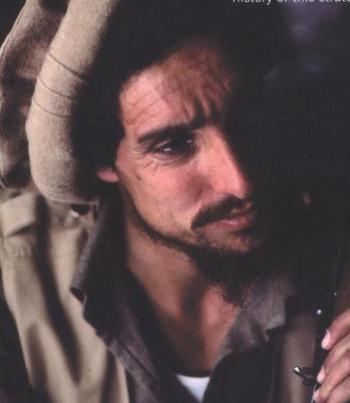
Ahmed Shah Massoud – Known affectionately as “The Lion of Panjsher”, Massoud led guerilla forces in Afghanistan against the invading Soviet Armies in the 1980’s. This ethnic Tajik will earn the love of American audience because of his pro-Western stance and his Russian-crushing style of warfare and will help to show that Afghanistan is not the wasteland that we picture it as.


Hasan as-Sabah – Not the most noble of men, but a very interesting character: Sabah was the leader of the Hashshashin or the “Assassins”, a Persian group that began using suicide bombing tactics against their enemies in the 11th century. He built a castle in the Alborz Mountains in modern day Iran and constructed an enormous “pleasure garden” filled with flowers, lush greenery and food and wine served by voluptuous virgins. Subjects were drugged and brought to the garden and awoke in the Eden-like atmosphere which was supposed to represent heaven. They were told that if they committed to martyrdom by suicide, they would return to this magical place and live there for all of eternity. Hardly a hero or a great man, but a fascinating story none-the-less.

Saturday, August 16, 2008

Three Point One Four

Even though the current official status is "delayed", it seems a much anticipated film adaptation of the novel Life of Pi is scheduled for 2009. This unusual story of a Hindu-Christian-Muslim castaway marooned on a life raft with a tiger has been through many prospective directors, including Alfonso Cuarón (Children of Men) and M. Night Shyamalan, and has yet to announce exactly who will be at the helm. Whoever takes on this task, it will be a very difficult film to make, although if it is executed correctly, the film will be amazing.

The problems lie with a) the film's setting, mostly in the Pacific Ocean on a twenty-foot-long boat, the majority of which is occupied by a 450 pound tiger, and b) with the whimsical and fantastic nature of the story which is both allegorical and real. Working with such an animal in any kind of shoot can be risky to begin with, but the actor who plays Pi and the tiger who stars as Richard Parker (the tiger's name) will be in such close quarters for the whole movie, it will be a film making nightmare. Pi's family also owns a zoo, which explains how the boy and the tiger end up together, and will require a barrage of animal actors that will make it costly and difficult. In the second instance, Yann Martel, the author of Life of Pi, lulls the reader into thinking that the book is based entirely on a true story ("one which will make us believe in God") and at the same time leaves us wondering what actually happened, even within the world of the novel. These two literary aspects will be so hard to capture on film, where it is hard to convince an audience they didn't actually see what you showed them.


Pi's fantastic story, which not only involves surviving starvation, thirst, the elements of sun and ocean, the appetite of a Bengal tiger and a man-eating island (yes, that's right), has a Shyamalan-esque ending that will leave audiences baffled. The only way for a filmmaker to attack this film will be to simply tell the story as it appears superficially. Forget the underlying questions of God and humanity and the will to live, and focus on the essentials; a boy and a tiger. If this is done, the film will be a spellbinding story of survival at sea and the audience will loose themselves in the depths of vast Pacific and feel the fear of being trapped with a man-eating tiger on a life boat. Martel's messages are strong and well-rounded, but to and transport them from page to moving picture will not work. Too much will be lost in the process and the film will suffer for it.


My advice, should it ever be made, is see the Life of Pi movie only after reading the book. Then you will feel the excitement of wondering how exactly this story can be translated to film. Even if it is a disaster, you will come away knowing what you know from the text, and what exactly the filmmakers were trying to accomplish and why they failed. If they fail, I should say, I don't mean to be so pessimistic.

Tuesday, August 12, 2008

The Bullet Riddled Author


I know the question on most everyone's mind is, "Well, 50 Cent has accomplished many incredible things in his life, for someone who's been shot nine times that is, but when is he going to become a respected author?"


Well, fortunately the answer to that question is: He already has! In fact 50, along with other authors and well-known rappers, have written several books for the G-Unit Publishing Co. Most of them revolve around topics that the rapper knows about best, like life on the streets, selling drugs, killing cops and other stereotypical roles for young African-American men. You know what they say: write what you know.


His newest book, Harlem Heat, is about a mother-daughter duo that go on a crime spree in the Upper East side of Manhattan. The first line of the book is: "I can't front." Very powerful.


While I applaud the entrepreneur's crack at writing, these novels don't seem to be much more than a continuation of the story-telling that most of us know from his music. I suppose these books are designed for the white suburban kids whose parents won't let them buy the records but figure that since it's a book, it can't be as bad. Or maybe they are trying to reach the youngsters who are turned off by reading in general, which is most of the population of children today, and want to give them something they can sink their teeth into. If this is the case, I guess the intention is nobel, if totally misguided.


Prehaps what the well-known rapper should be writting about is his rise to fame, the struggles he overcame to become the respected lyricist he is today or how to make it in the music business, which is not an easy task. Instead he has found another medium to fill kids heads with tales of cool violence and the quiet dignity of drug dealing.

I don't want to sound like Tipper Gore here, I just wanted to point out how ridiculous I felt when I picked up Harlem Heat in the library and found out that it is merely one in a long series of 50 Cent novels. He's already tried acting, rapping and writing, so I guess all that's left is politics. If he runs in my state, I'll be on the first train out.